+51 913 965 587

Peru Bucket List Logo Web
Contact Peru Bucket List by phone

+51 913 965 587

Peru Bucket List Logo Web
Contact Peru Bucket List by phone

+51 913 965 587

Peru Bucket List Logo Web
Contact Peru Bucket List by phone

Machu Picchu

Machu Picchu Travel Guide

Machu Picchu is one of Peru’s most important archaeological and cultural destinations, located high in the Andes on the eastern slopes of the mountain range.

Planning a visit involves more than simply buying an entrance ticket. You need to understand how to get there, choose the right circuit and route, consider your travel time, decide where to stay and determine whether you want a traditional visit or a multi-day trekking experience.

This Machu Picchu travel guide covers everything you need to plan your visit, including tickets, circuits, transportation, trekking routes, weather, accommodation, things to see and practical travel tips.

Machu Picchu at a Glance

Machu Picchu is located in the Cusco Region of Peru at approximately 2,430 meters (7,972 feet) above sea level. It forms part of the Historic Sanctuary of Machu Picchu, a UNESCO World Heritage property recognized for both its cultural and natural significance.

📍 Location: Cusco Region, Peru 🇵🇪
⛰️ Altitude: Approximately 2,430 m / 7,972 ft
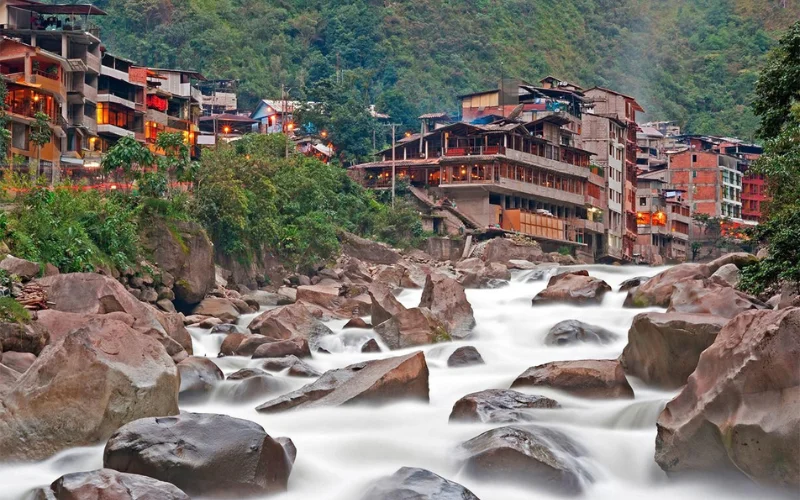
🏘️ Nearest town: Machupicchu Pueblo (Aguas Calientes)
🚆 Main access: Train, trekking routes and alternative overland routes
🏛️ Best known for: Inca architecture, terraces, archaeological remains and mountain landscapes
🌎 UNESCO status: World Heritage Site
🗺️ Visitor system: 3 circuits and 10 designated routes
🥾 Typical visit: Day trip, overnight visit or multi-day trek

Machu Picchu is lower than Cusco in elevation, although some trekking routes used to reach the site pass through considerably higher mountain areas.

Why Visit Machu Picchu?

Machu Picchu combines archaeology, history, architecture and dramatic mountain landscapes in one destination.

The archaeological complex contains terraces, ceremonial structures, plazas, residences, agricultural areas, stone stairways and sophisticated water systems. Its architecture was carefully integrated into the steep mountain environment.

For many travelers, the main appeal is not simply seeing the ruins but understanding how the Inca civilization designed and adapted this extraordinary settlement to its surroundings.

Machu Picchu can also be experienced in different ways. You can visit by train, hike the Classic Inca Trail, complete the Salkantay Trek, combine trekking and adventure activities through the Inca Jungle, or approach the area through alternative overland routes.

Your ideal experience depends on how much time you have, your physical condition, your interests and the type of journey you want to create.

History & Cultural Significance

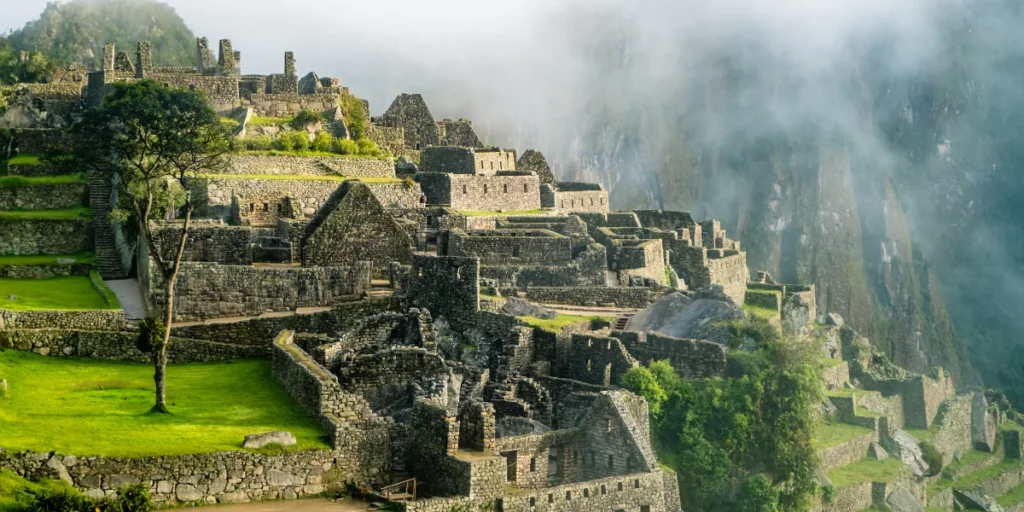
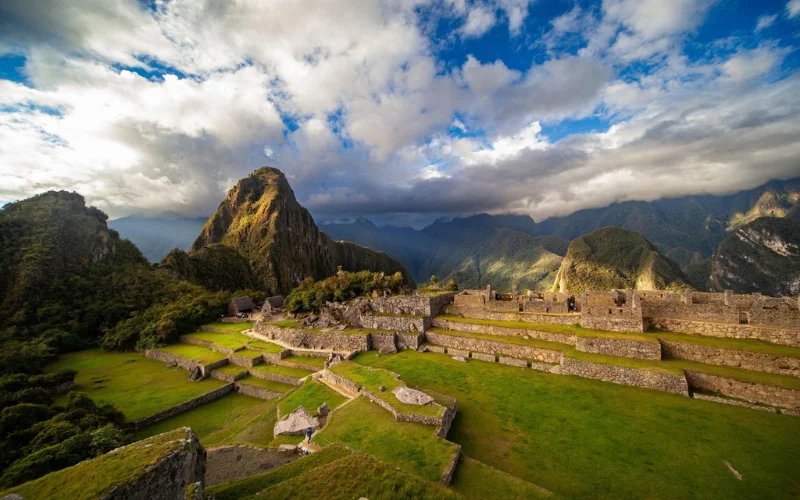
Machu Picchu citadel with Inca terraces and stone ruins surrounded by mountains in Peru

Machu Picchu, the awe-inspiring Lost City of the Incas, is one of the world’s most iconic archaeological sites. Hidden high in the Andes, this ancient citadel showcases the Inca Empire’s architectural brilliance, with its breathtaking terraces, temples, and panoramic mountain views. A true bucket-list destination!

The site contains residential, agricultural, ceremonial and administrative structures connected by terraces, stairways and carefully constructed pathways.

Its precisely fitted stonework, water systems and agricultural terraces demonstrate the sophisticated engineering used by the Incas to adapt construction to the steep mountain environment.

Machu Picchu was abandoned during the 16th century following the Spanish conquest of the Inca Empire. However, the site was not simply an unknown «lost city.» Local people continued to know and use the surrounding area.

In the early 20th century, Machu Picchu gained international attention through the work of Hiram Bingham and subsequent archaeological research. UNESCO describes the sanctuary as one of the most significant tangible legacies of the Inca civilization.

How to Get to Machu Picchu
There are several ways to reach Machu Picchu, and the right option depends on your time, budget, fitness level and the type of experience you want.

The main options are traveling by train, hiking one of the major trekking routes or using an alternative overland route through Hidroelectrica.

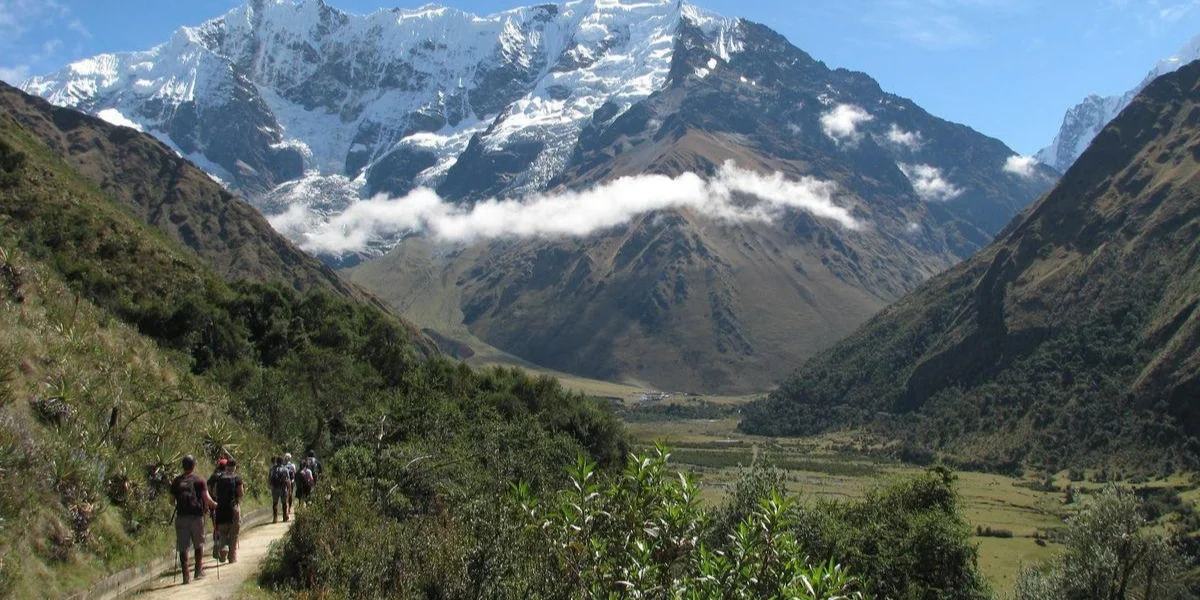
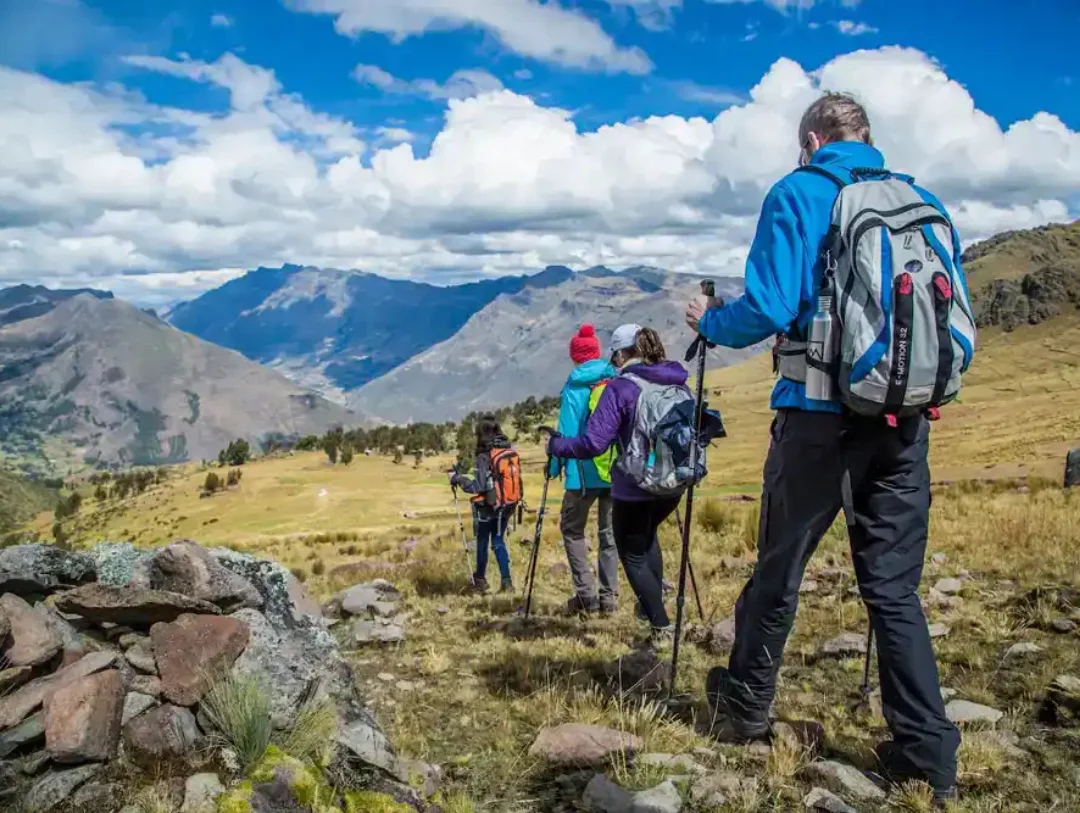
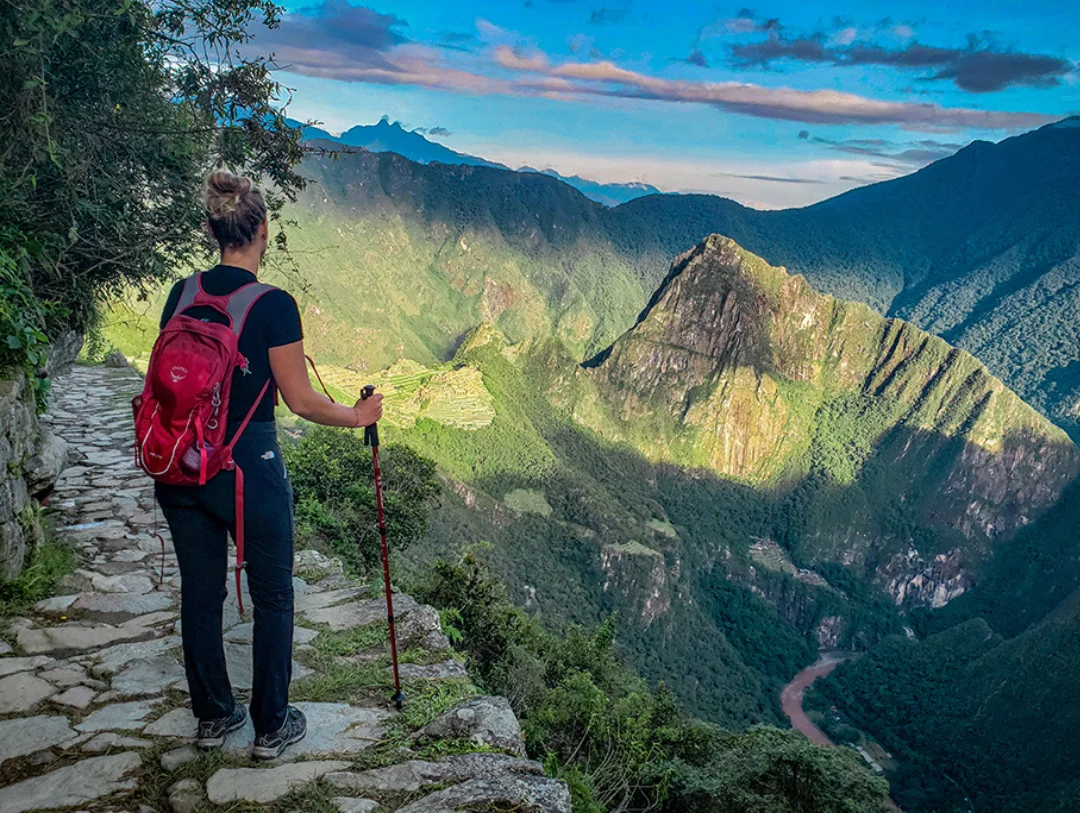
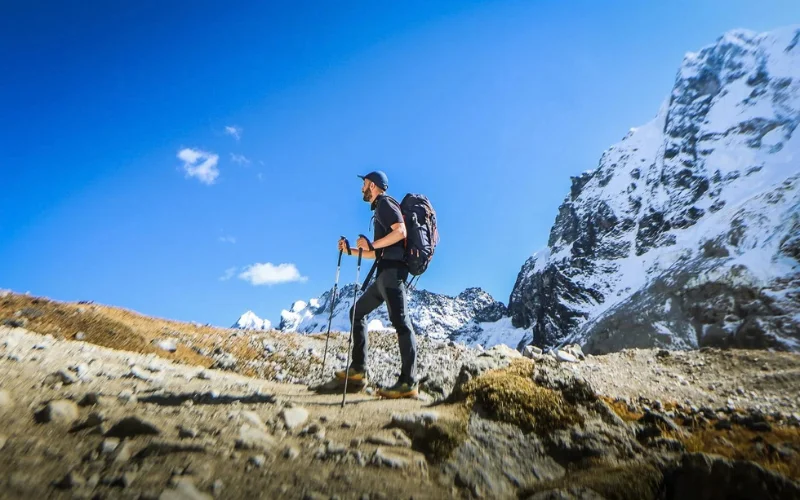
Hikers trekking through the Andes on the way to Machu Picchu in Peru

Train to Machu Picchu

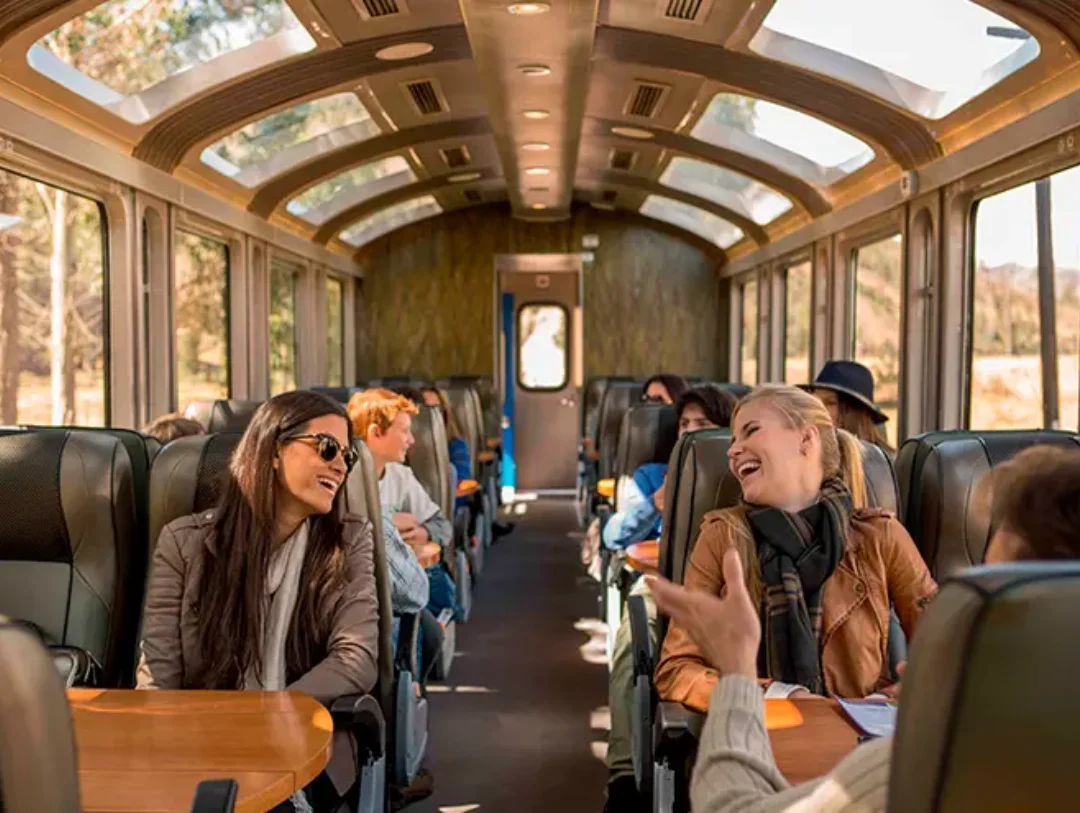
The train is the most straightforward option for travelers who want to visit Machu Picchu without completing a multi-day trek.

Most train journeys connect the Sacred Valley or Cusco area with Machupicchu Pueblo, also known as Aguas Calientes. From the town, visitors continue to the archaeological site according to their entrance arrangements.

Best for:

  • First-time visitors
  • Travelers with limited time
  • Families
  • Couples
  • Travelers who prefer comfort over trekking

A train-based visit can be completed as a day trip or as an overnight experience.


Classic Inca Trail to Machu Picchu

The Classic Inca Trail is one of the most famous trekking routes in South America.

The trek follows part of the historic Inca road network and combines mountain landscapes, archaeological sites and cloud-forest scenery before reaching Machu Picchu.

Best for:

  • Trekkers interested in Inca history
  • Travelers who want a traditional trekking experience
  • Hikers looking for a multi-day adventure

The Inca Trail requires advance planning and operates under specific regulations and availability.


Salkantay Trek to Machu Picchu

The Salkantay Trek offers a different trekking experience, combining high mountain scenery with valleys and changing ecosystems on the way toward Machu Picchu.

One of the highlights is the transition from the high Andes toward warmer and greener environments.

Best for:

  • Experienced hikers
  • Travelers looking for a challenging trek
  • People interested in dramatic mountain landscapes
  • Travelers who prefer an alternative to the Classic Inca Trail

The Salkantay route reaches significantly higher elevations than Machu Picchu itself, making acclimatization an important part of preparation.


Inca Jungle Trek to Machu Picchu

The Inca Jungle Trek combines trekking with adventure activities and changing landscapes.

Depending on the itinerary, the experience can include mountain roads, cycling, hiking and other adventure activities before reaching Machupicchu Pueblo.

Best for:

  • Adventure travelers
  • Younger or active travelers
  • Travelers who want more than traditional hiking
  • Visitors looking for a varied multi-day experience

Hidroelectrica Route to Machu Picchu

The Hidroelectrica route is an alternative overland approach to Machupicchu Pueblo.

Instead of taking the train for the entire journey, travelers can reach Hidroelectrica and continue toward Machupicchu Pueblo on foot or by available transport options.

Best for:

  • Budget-conscious travelers
  • Travelers with more time
  • Visitors interested in an alternative route

This option involves a longer journey and should be planned carefully around your Machu Picchu entrance time.


Machu Picchu from the Sacred Valley

The Sacred Valley is one of the most convenient areas from which to organize a Machu Picchu visit.

Travelers staying in places such as Ollantaytambo can connect with trains toward Machupicchu Pueblo without necessarily returning to Cusco first.

This can be particularly useful when combining Machu Picchu with a Sacred Valley itinerary.

Best for:

  • Travelers visiting the Sacred Valley
  • Longer Peru itineraries
  • Visitors who want to reduce unnecessary travel between Cusco and Machu Picchu

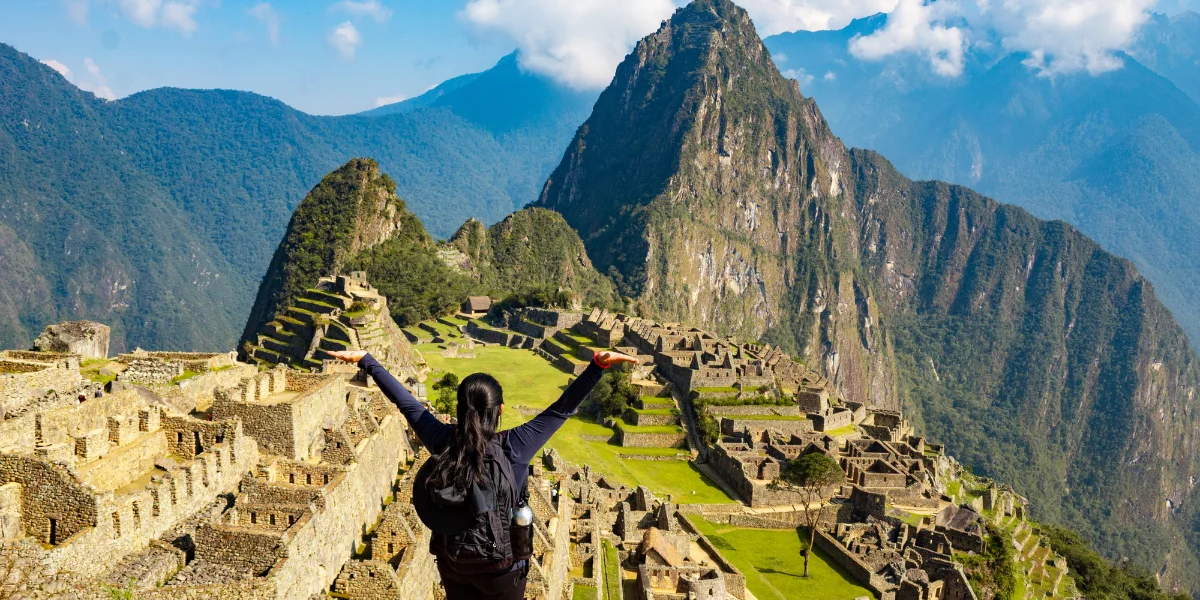
Machu Picchu in Peru on a clear sunny day with a traveler overlooking the Inca ruins

Best Time to Visit Machu Picchu

Machu Picchu can be visited throughout the year, but weather conditions vary considerably between seasons.

Dry Season

The dry season generally offers lower rainfall and often clearer conditions, particularly during the middle of the year.

However, this period can also bring more visitors and stronger daytime sun.


Rainy Season

The rainy season can bring more frequent showers and cloudier conditions.

Rain does not necessarily mean that a visit will be unsuccessful. Machu Picchu’s mountain environment can look particularly atmospheric when clouds and mist move through the surrounding peaks.

The main consideration is flexibility with weather and appropriate rain protection.


Shoulder Seasons

The transition periods between the wetter and drier seasons can offer a useful balance between weather conditions and visitor levels.

Rather than choosing a month based only on weather, consider your entire itinerary, trekking plans and tolerance for rain.


Choosing the Best Time for Your Trip

Your ideal time to visit depends on what you want to do.

A traveler planning a train visit has different considerations from someone hiking the Inca Trail or Salkantay Trek.

If Machu Picchu is part of a larger Peru itinerary, consider the weather conditions in Cusco, the Sacred Valley and any trekking destinations you plan to visit as well.

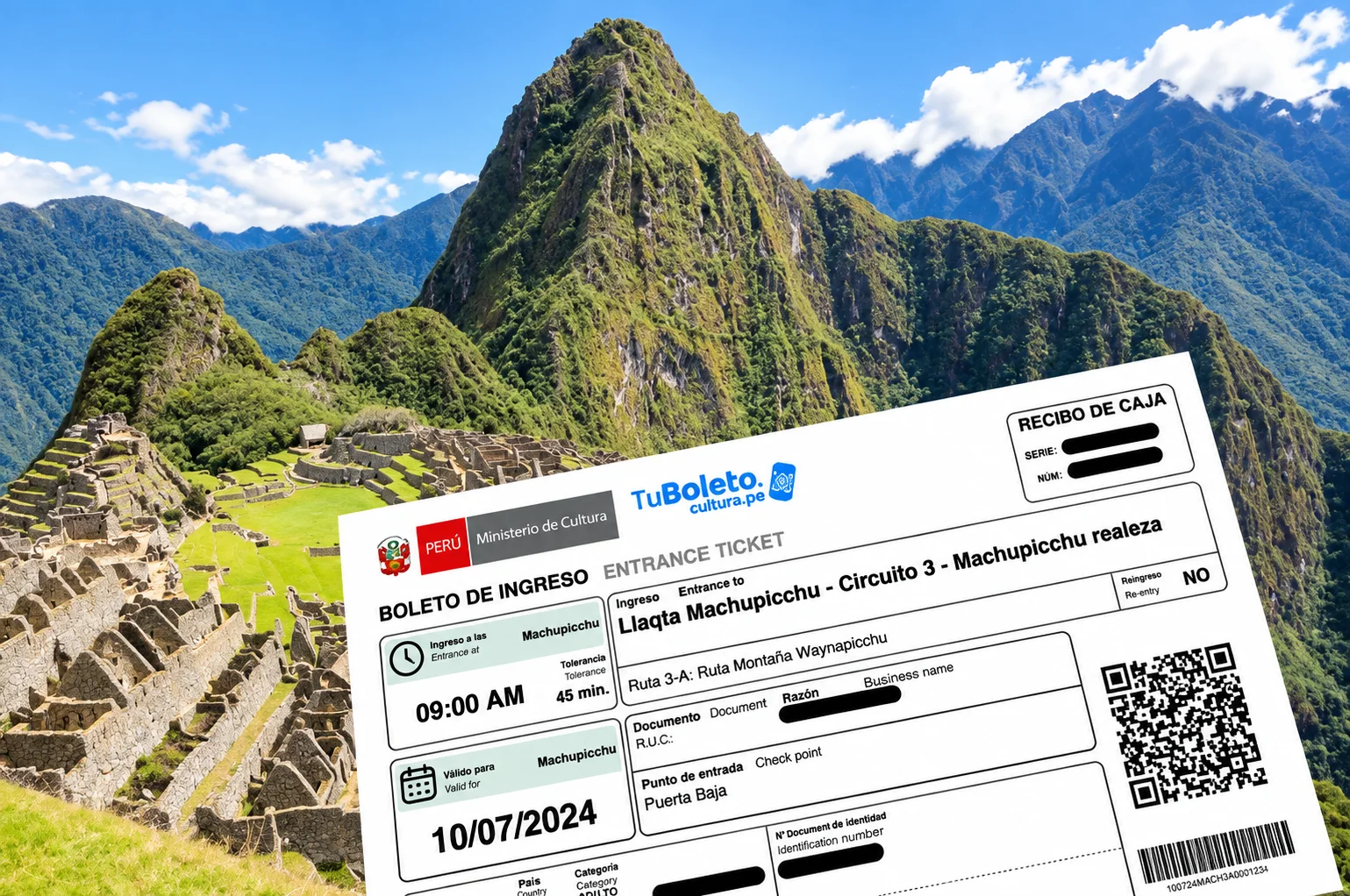
Machu Picchu entrance ticket from TuBoleto showing Circuit 3 and Waynapicchu Mountain route

Machu Picchu Tickets

Machu Picchu uses a designated circuit and route system, meaning your entrance ticket determines which part of the archaeological site you can visit.

Choosing a ticket is therefore not simply about selecting a date. You should also consider the circuit, route, any additional mountain hike and the type of experience you want.

What to Consider Before Buying Your Ticket

Before purchasing your Machu Picchu ticket, consider:

  • Your preferred travel date
  • The circuit you want to visit
  • Whether you want an additional mountain hike
  • Available routes
  • Available entry times
  • Your physical ability
  • Your train or trekking schedule
  • Whether you are traveling during high season

Official availability, routes, schedules and regulations can change, so always verify the current information before finalizing your plans.

Where to Buy Machu Picchu Tickets

Official online ticket sales are available through the Peruvian Ministry of Culture’s ticketing platform.

In-person ticketing is also maintained in Machupicchu Pueblo under specific conditions and subject to availability.

For the most accurate information, check the official Machu Picchu ticketing system before purchasing.


Machu Picchu Circuits & Routes

Since June 1, 2024, Machu Picchu has operated with three visitor circuits grouping ten designated routes. The current official system is divided into Circuit 1 (Panoramic), Circuit 2 (Machupicchu Classic) and Circuit 3 (Machupicchu Royalty).

Your circuit matters because it determines the areas of Machu Picchu you will visit.


Circuit 1: Panoramic

Circuit 1 focuses primarily on elevated viewpoints and panoramic perspectives of Machu Picchu.

It includes four routes:

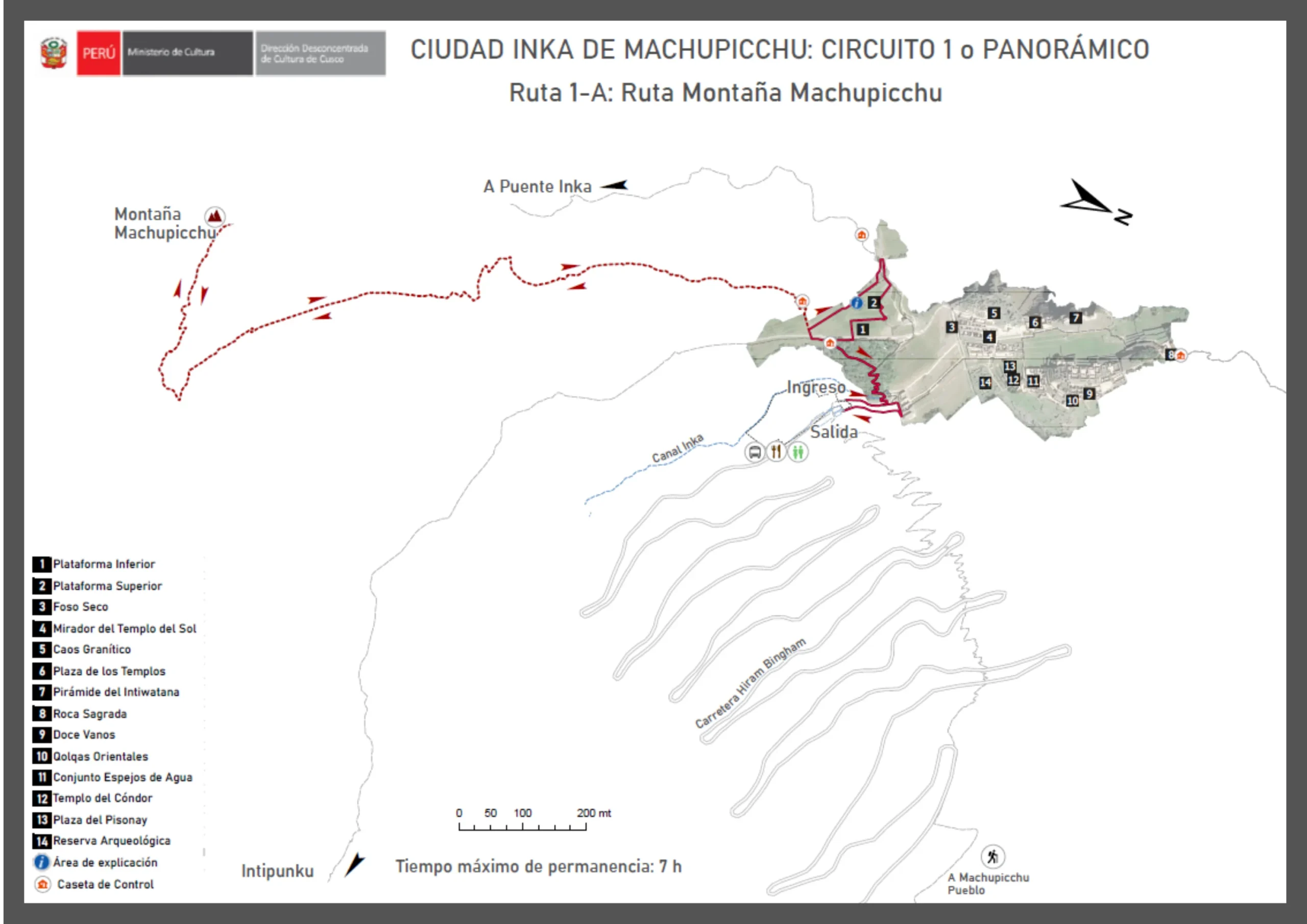
  • Route 1-A: Machupicchu Mountain
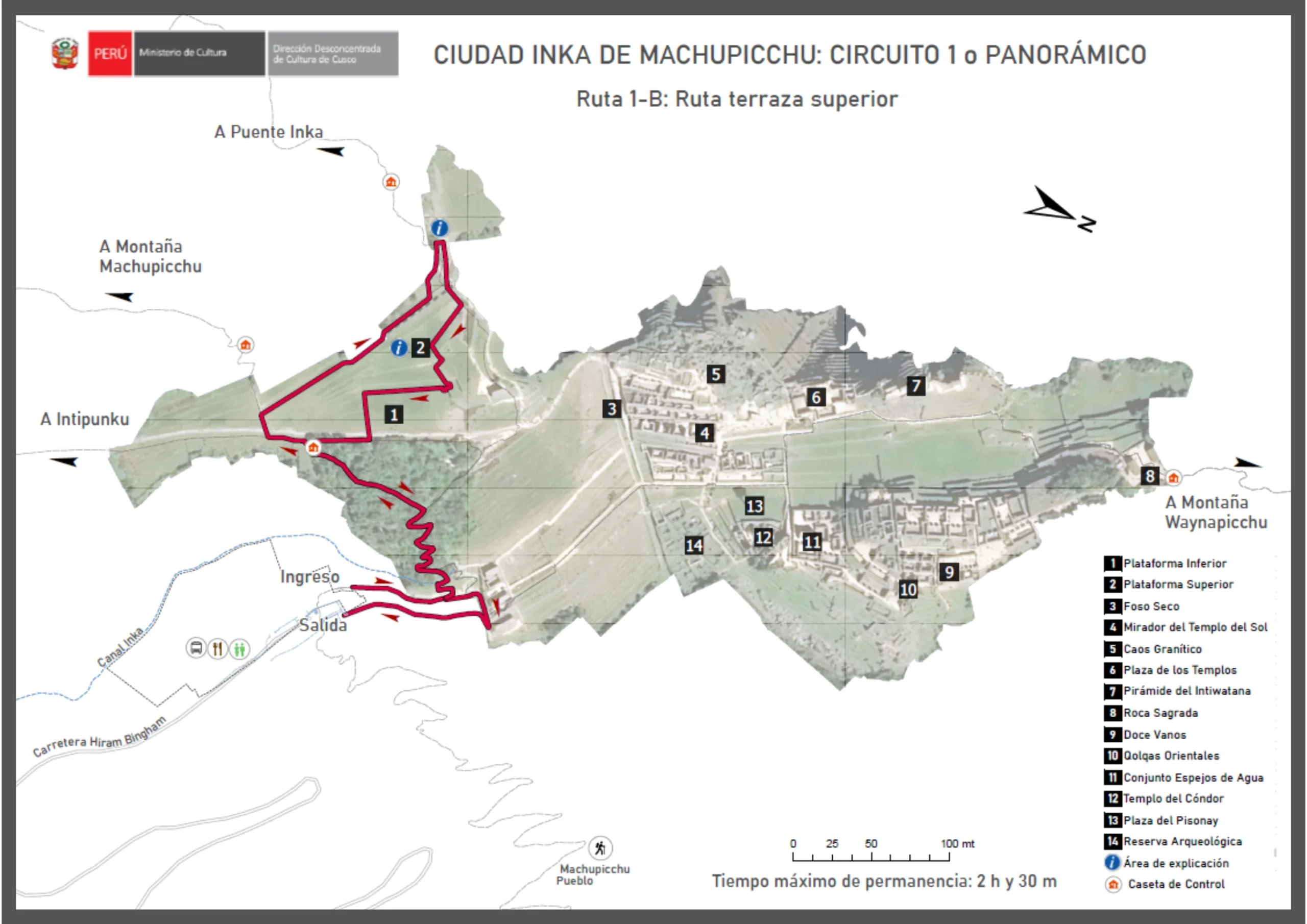
  • Route 1-B: Upper Terrace
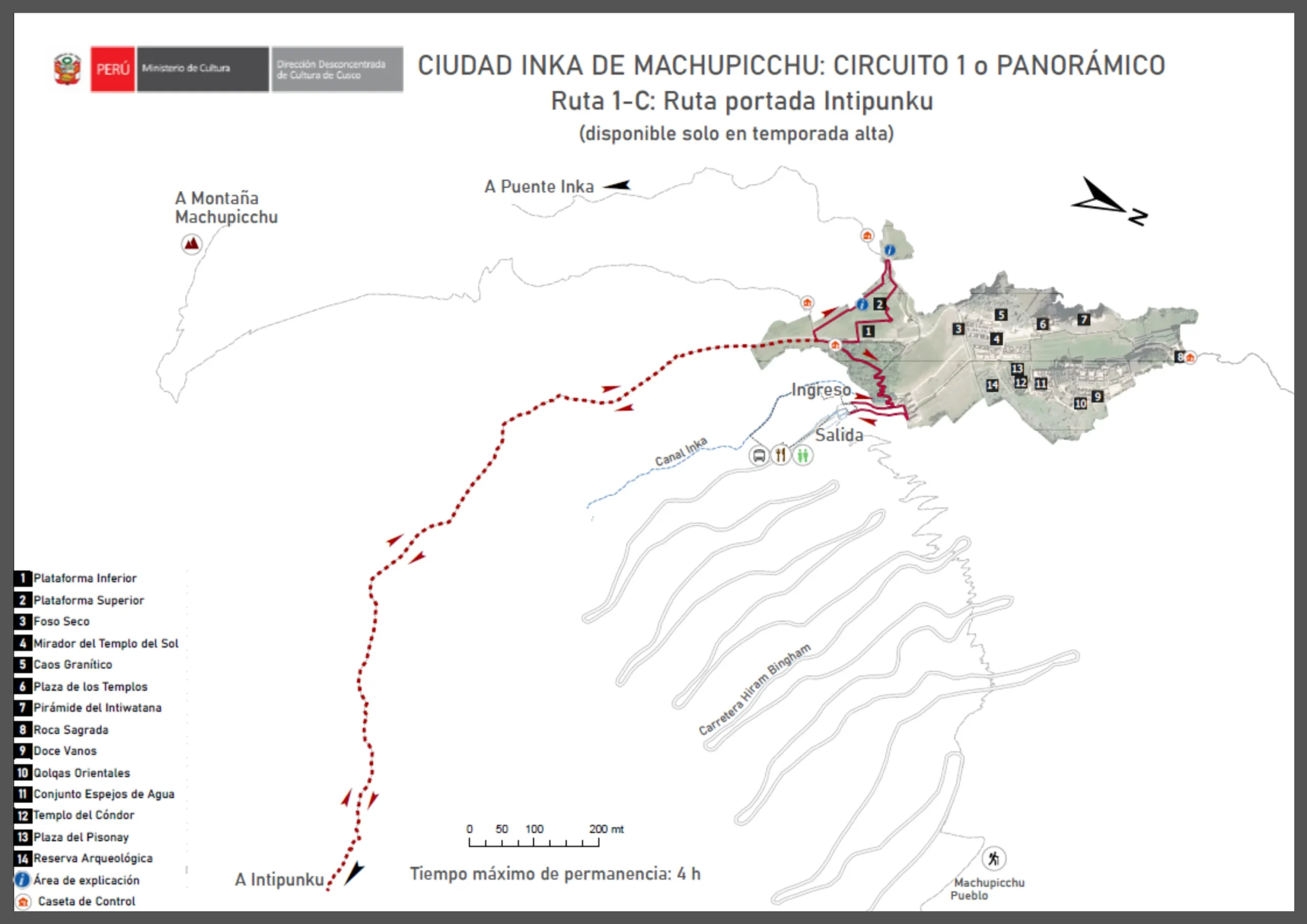
  • Route 1-C: Intipunku Gate
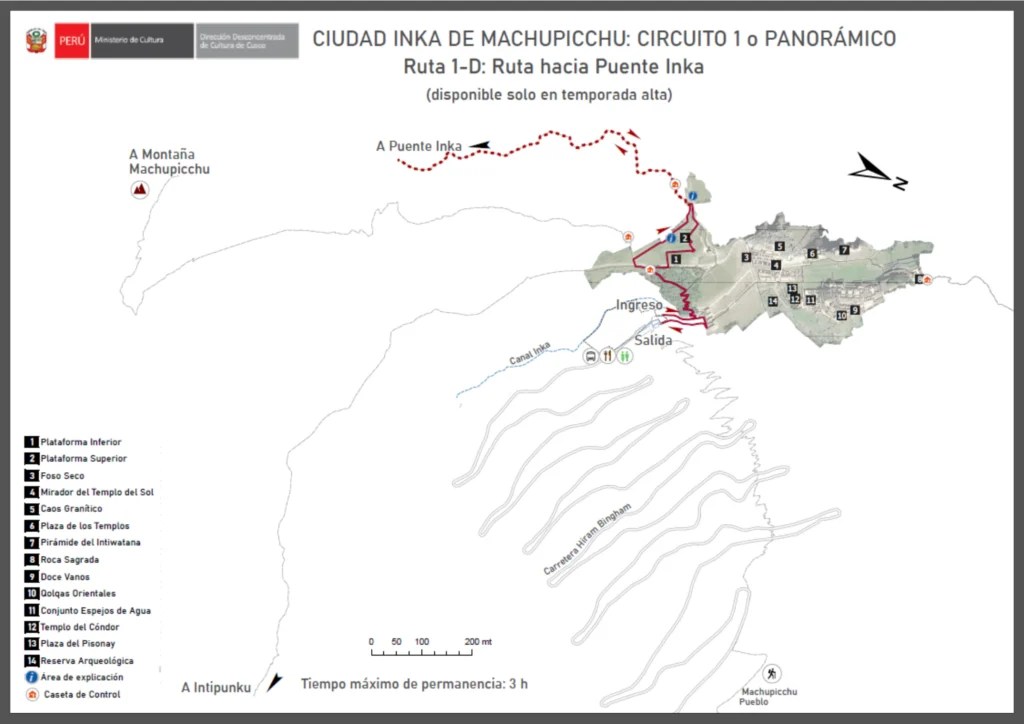
  • Route 1-D: Inca Bridge

The official Ministry of Culture currently lists Routes 1-C and 1-D as high-season routes.

Route 1-A: Machupicchu Mountain

This route combines the visit to Machu Picchu with the hike toward Machupicchu Mountain, providing elevated views over the archaeological site and surrounding mountains.

Best for: travelers who want a panoramic hiking experience in addition to their Machu Picchu visit.

Physical effort: Challenging

Important: A specific ticket is required and availability is limited.

Machu Picchu Circuit 1- A panoramic route map showing Machu Picchu Mountain trail and archaeological sites


Route 1-B: Upper Terrace

Route 1-B focuses on the upper terrace area and panoramic viewpoints overlooking Machu Picchu.

It is particularly relevant for travelers who want elevated perspectives of the archaeological complex without selecting one of the longer mountain hikes.

Best for: panoramic views and photography.

Physical effort: Moderate walking

Machu Picchu Circuit 1-B panoramic route map showing the Upper Terrace route


Route 1-C: Intipunku Gate

Route 1-C connects the Machu Picchu visit with the Intipunku, or Sun Gate, area.

Intipunku is historically associated with the approach to Machu Picchu along the Inca road network.

Best for: travelers interested in the Inca Trail landscape and an additional hiking experience.

Availability: Currently listed as a high-season route.

Machu Picchu Circuit 1-C panoramic route map showing the Intipunku Gate route


Route 1-D: Inca Bridge

Route 1-D provides access toward the Inca Bridge area and combines the archaeological visit with an additional route through the surrounding landscape.

Best for: travelers interested in the Inca Bridge and a different perspective beyond the central archaeological area.

Availability: Currently listed as a high-season route.

Machu Picchu Circuit 1-D panoramic route map showing the Inca Bridge route


Circuit 2: Machupicchu Classic

Circuit 2 is designed around the classic archaeological experience and includes two routes:

  • Route 2-A: Designed Route
  • Route 2-B: Lower Terrace Route

For travelers whose priority is experiencing the core archaeological areas, Circuit 2 is an important option to compare when planning a first visit.

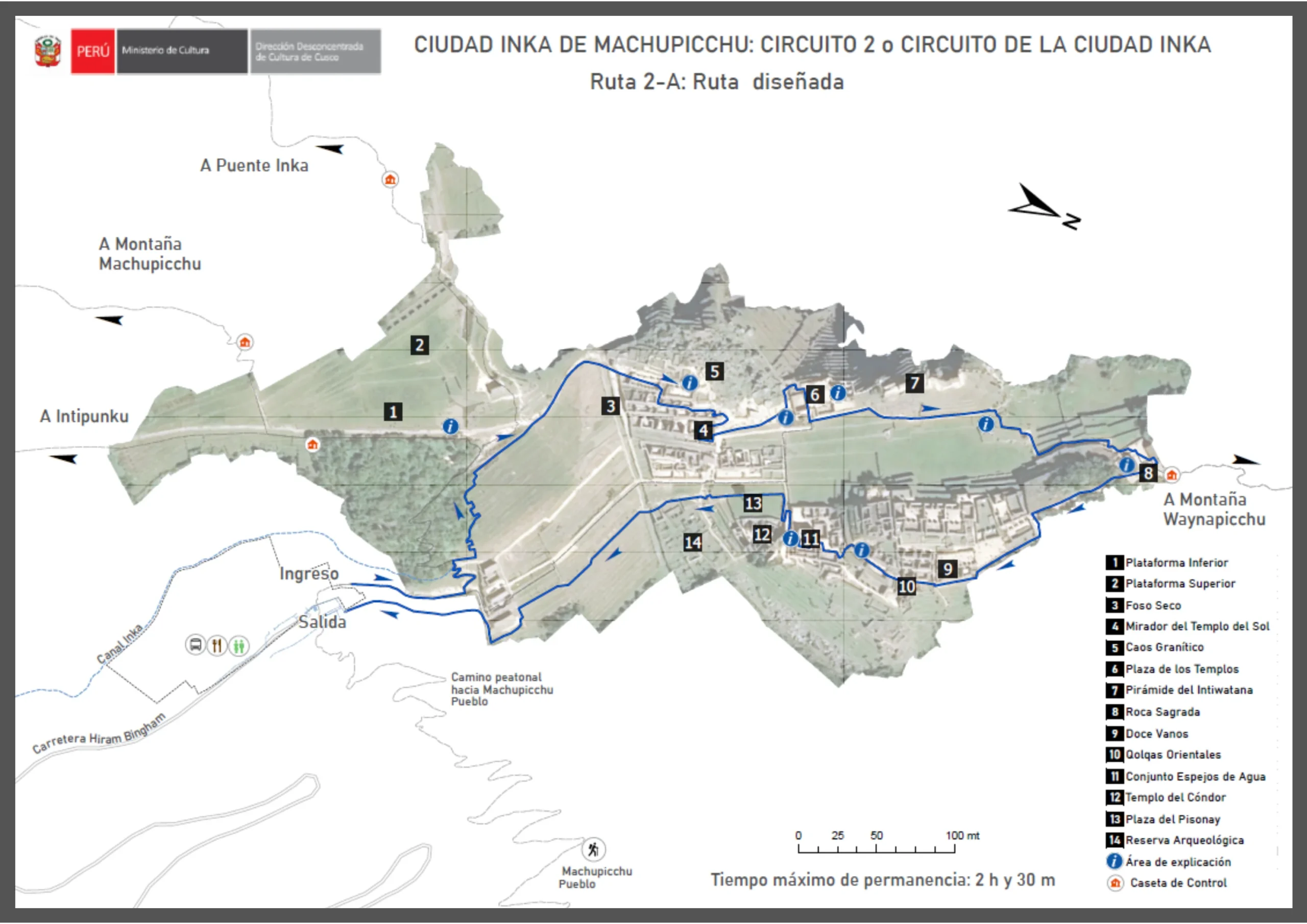
Route 2-A: Designed Route

Route 2-A provides a comprehensive journey through important archaeological areas of Machu Picchu, including major architectural and ceremonial structures.

Best for: travelers who want to explore the classic archaeological experience.

Physical effort: Moderate walking

Machu Picchu Circuit 2-A map showing the designed route and archaeological sites


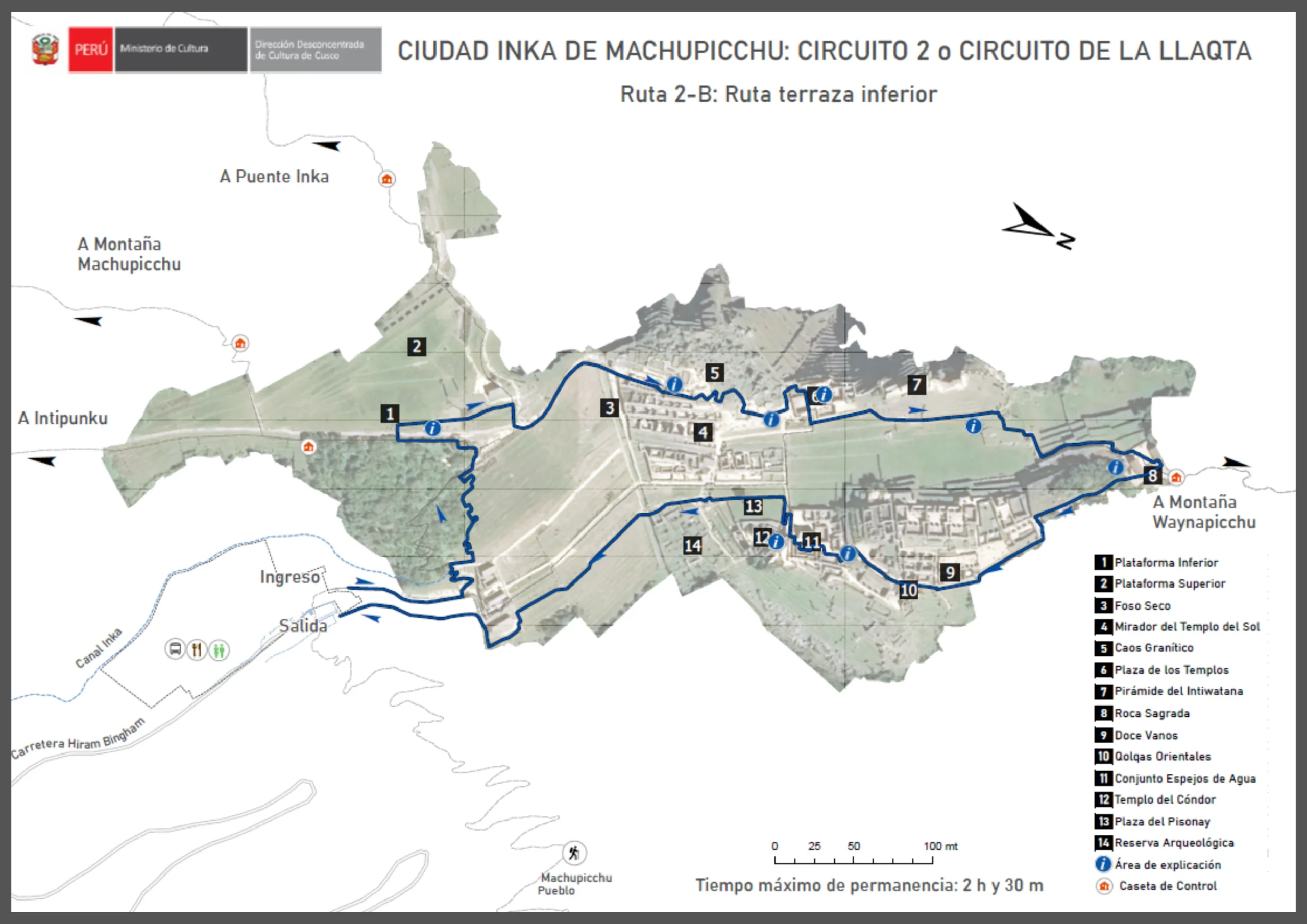
Route 2-B: Lower Terrace Route

Route 2-B follows the lower terrace route and provides access to important areas of the archaeological complex.

The route includes views and structures associated with the classic Machu Picchu experience.

Best for: travelers looking for a classic route through the archaeological site.

Physical effort: Moderate walking

Machu Picchu Circuit 2-B map showing the Lower Terrace route and archaeological sites


Circuit 3: Machupicchu Royalty

Circuit 3 focuses on the lower and royal sectors of Machu Picchu and includes four routes:

  • Route 3-A: Huayna Picchu Mountain
  • Route 3-B: Designed Route
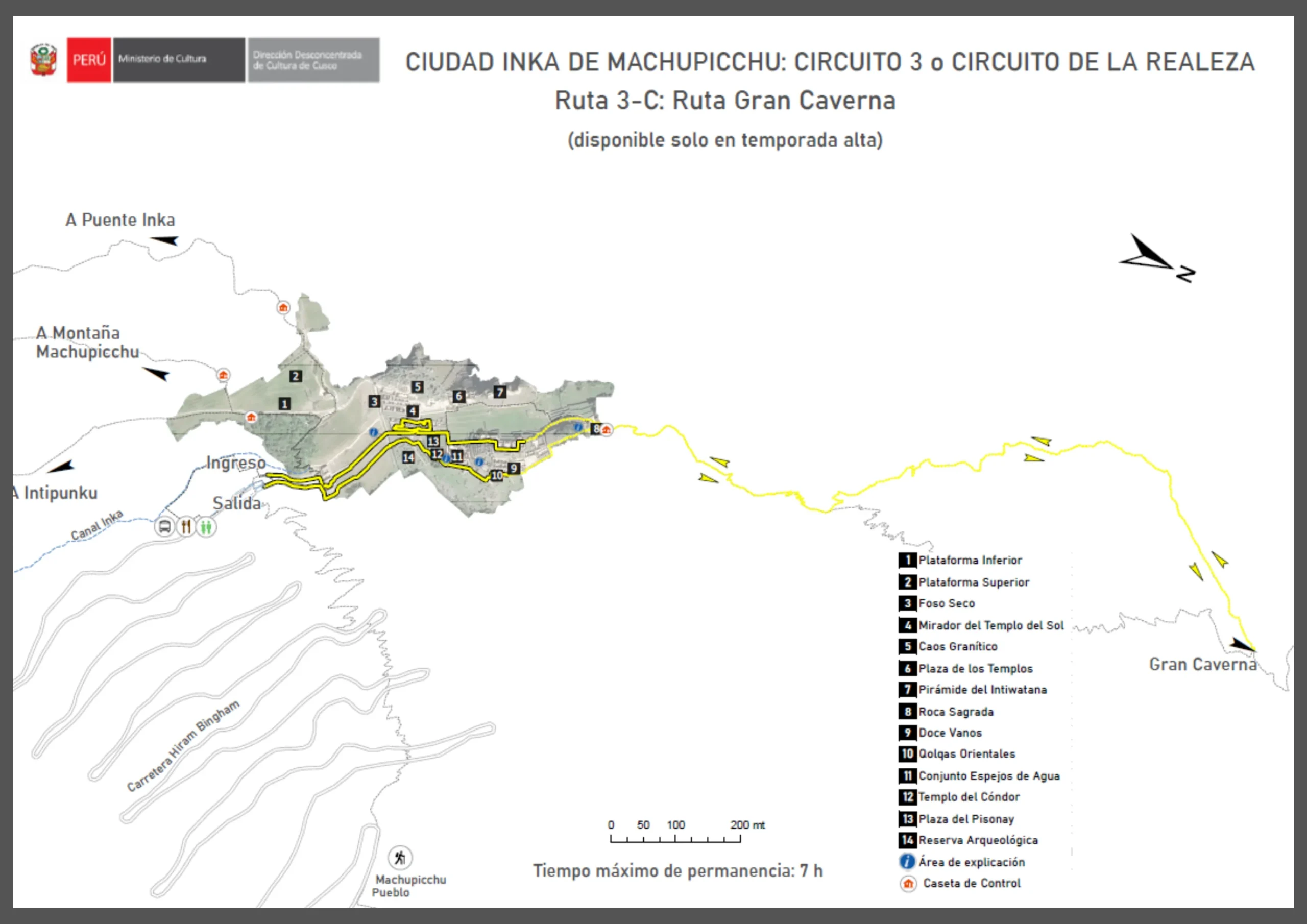
  • Route 3-C: Great Cavern
  • Route 3-D: Huchuy Picchu

The official Ministry of Culture currently lists Routes 3-C and 3-D as high-season routes.

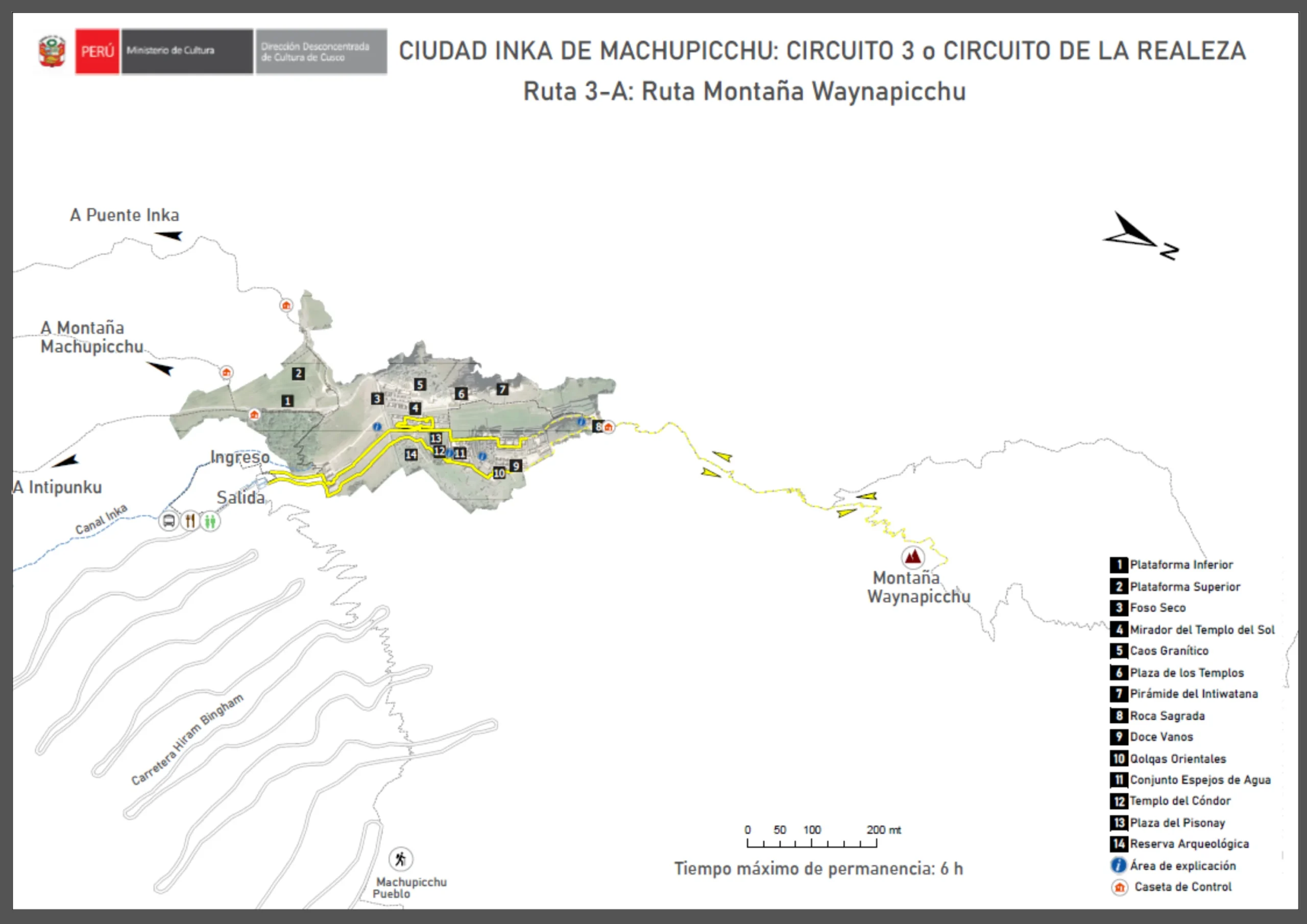
Route 3-A: Huayna Picchu Mountain

Route 3-A combines the Machu Picchu visit with the hike to Huayna Picchu, the distinctive mountain rising behind the archaeological complex.

The hike is significantly more demanding than a standard visit to the citadel and involves steep sections.

Best for: experienced hikers who want an additional mountain experience and elevated views.

Physical effort: Challenging

Important: This route requires a specific ticket and has limited availability.

Machu Picchu Circuit 3-A map showing the Waynapicchu Mountain route


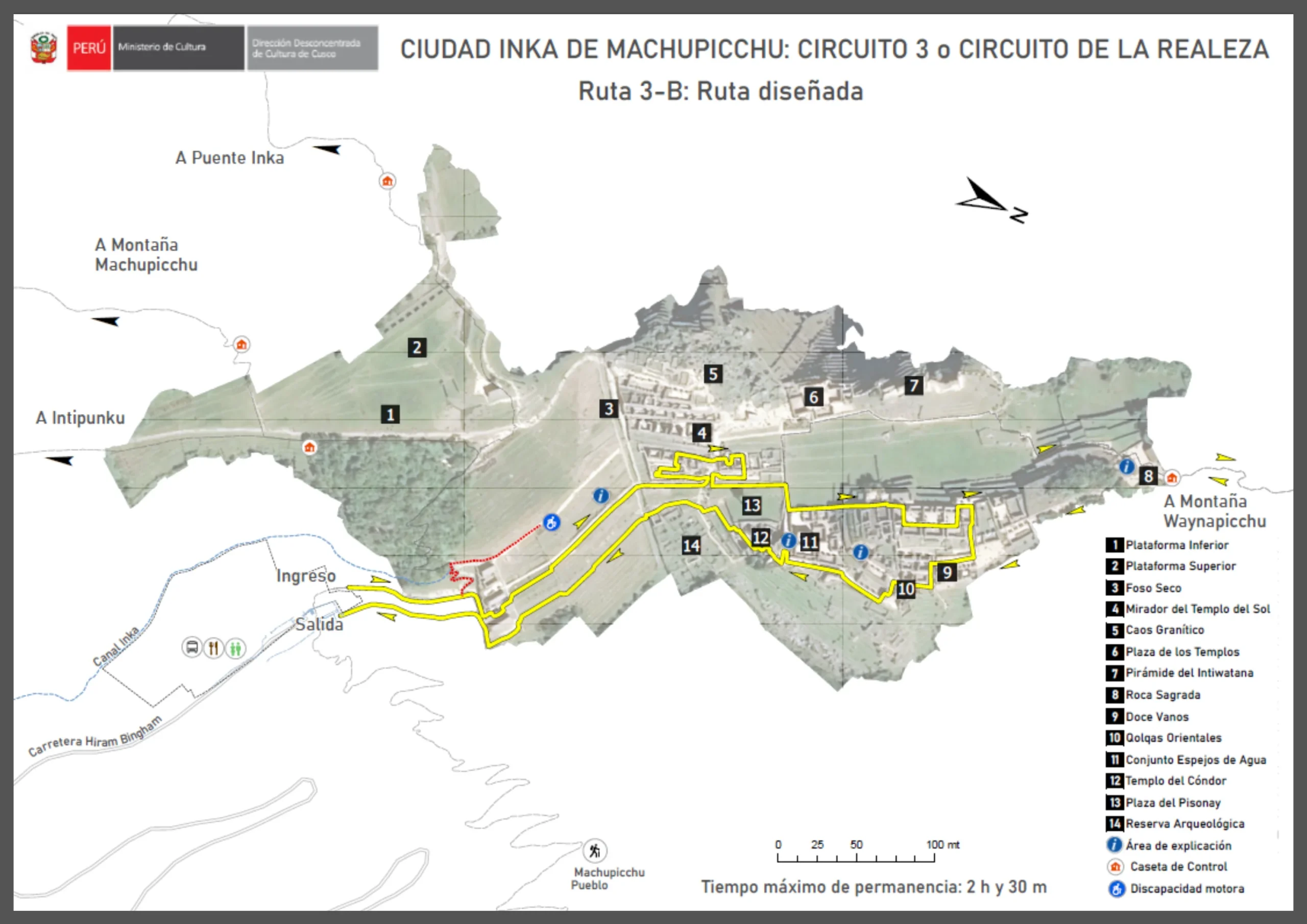
Route 3-B: Designed Route

Route 3-B focuses on the lower and royal sectors of Machu Picchu and includes important structures within the archaeological complex.

It provides a more moderate walking experience compared with the mountain routes.

Best for: travelers interested in the archaeological site without adding a major mountain hike.

Physical effort: Moderate

Machu Picchu Circuit 3-B map showing the designed route


Route 3-C: Great Cavern

Route 3-C includes the Great Cavern, also associated with the area traditionally known as the Temple of the Moon.

The route adds a substantial hiking component to the Machu Picchu experience.

Best for: travelers looking for a longer and more demanding route.

Physical effort: Challenging

Availability: Currently listed as a high-season route.

Machu Picchu Circuit 3-C map showing the Great Cavern route


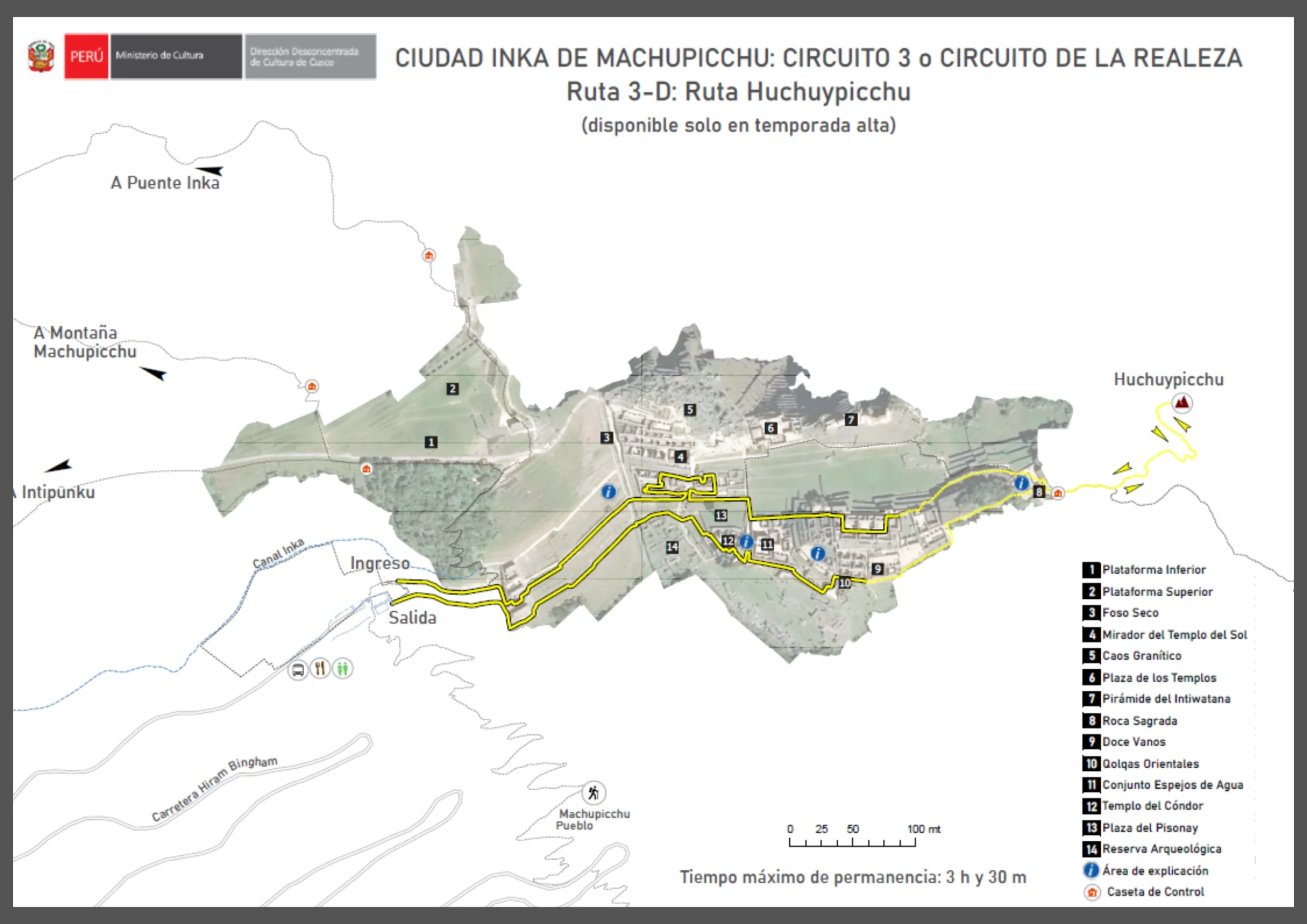
Route 3-D: Huchuy Picchu

Route 3-D combines the archaeological visit with the hike toward Huchuy Picchu, the smaller mountain located beside Huayna Picchu.

The additional climb provides a different perspective over Machu Picchu.

Best for: travelers who want an additional mountain hike without choosing the Huayna Picchu route.

Physical effort: Moderate to challenging

Availability: Currently listed as a high-season route.

Machu Picchu Circuit 3-D map showing the Huchuy Picchu Mountain route


Which Machu Picchu Circuit Should You Choose?

There is no single circuit that is ideal for every traveler.

Your choice should depend on what you want to see and how much physical effort you are comfortable with.

  • Choose a classic experience: Consider Circuit 2 if your priority is experiencing the main archaeological areas through a classic route.
  • Choose panoramic views: Consider Circuit 1 if panoramic viewpoints are one of your main priorities.
  • Choose Huayna Picchu: Consider Route 3-A if you specifically want to include Huayna Picchu.
  • Choose Huchuy Picchu: Consider Route 3-D if you want an additional mountain experience and the route is available for your travel date.
  • Choose a more challenging experience: Consider the routes that include Machupicchu Mountain, Huayna Picchu or other additional hiking sections.
  • Choose a less demanding visit: Compare the designated routes that do not include an additional mountain hike and select the one that best matches your physical ability.

Important: Route availability, seasonal operation and regulations can change. Always verify the current official system before purchasing your ticket.


How Many Days Do You Need for Machu Picchu?

The amount of time you need depends on how you plan to experience Machu Picchu.

One Day

A one-day visit can work for travelers with limited time who want to visit Machu Picchu by train.

The day usually involves transportation to Machupicchu Pueblo, the visit to the archaeological site and the return journey.


Two Days

Two days allow for a more relaxed experience.

You can travel to Machupicchu Pueblo on the first day, stay overnight and visit Machu Picchu the following day.

This reduces the pressure of coordinating the archaeological visit and long-distance transportation on the same day.


Three Days or More

Three or more days make sense when Machu Picchu is combined with the Sacred Valley, additional Cusco experiences or a multi-day trek.


Multi-Day Treks

If you choose the Inca Trail, Salkantay Trek or Inca Jungle, Machu Picchu becomes the final part of a longer travel experience rather than simply a day visit.


Where to Stay for Machu Picchu

You do not have to stay in Machupicchu Pueblo to visit Machu Picchu.

Your accommodation choice depends on the structure of your itinerary.

What to See at Machu Picchu

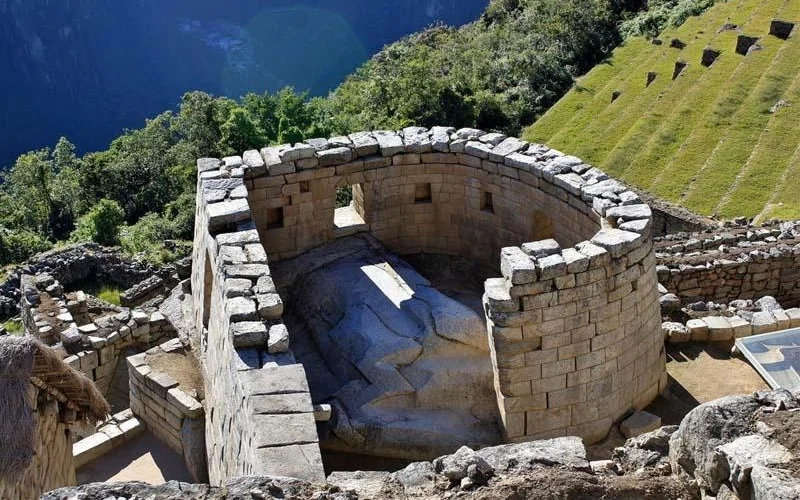
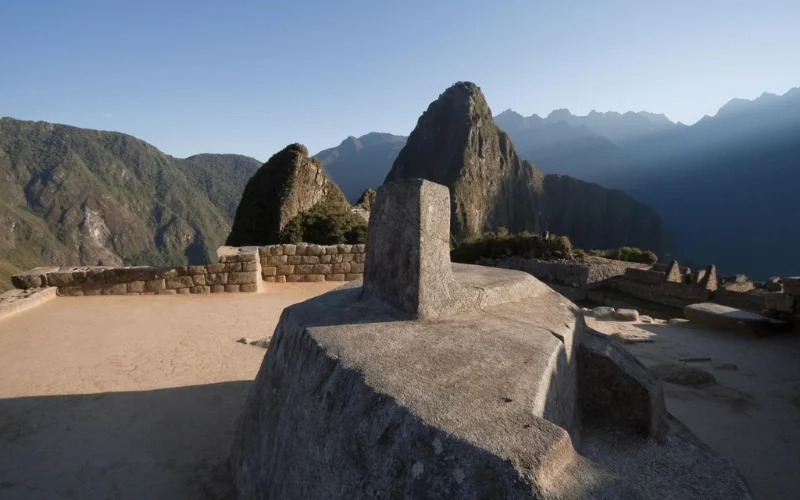
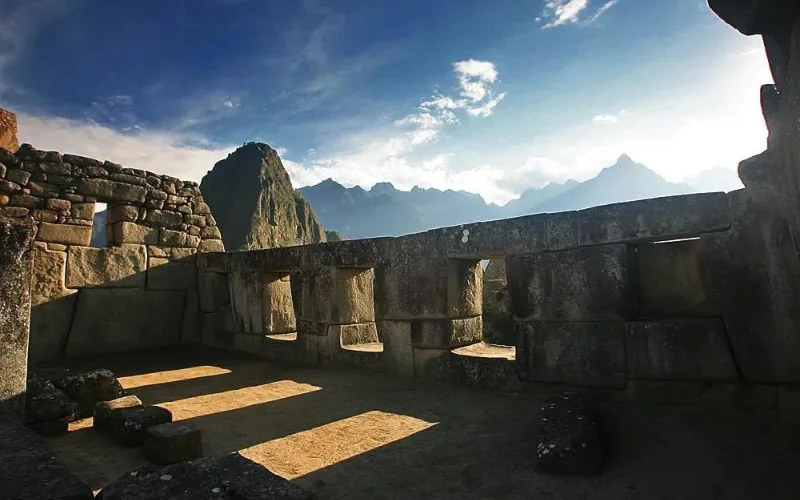
Machu Picchu contains numerous archaeological structures and features.

The areas you can see depend on the circuit and route selected.

Machu Picchu Altitude

Machu Picchu sits at approximately 2,430 meters (7,972 feet) above sea level.

This is lower than Cusco, which means that visitors should not assume that Machu Picchu itself is the highest point of their trip.

The situation is different for travelers completing trekking routes.

The Inca Trail and Salkantay Trek, for example, reach substantially higher elevations before descending toward Machu Picchu.

If you are trekking, acclimatization in Cusco or another high-altitude destination is an important part of preparation.

Practical Travel Tips for Machu Picchu

A little preparation can make your visit much easier.

Choose your circuit before buying your ticket: Do not treat the entrance ticket as a simple date reservation. The circuit determines the experience you will have inside the archaeological site.

Check the weather: Machu Picchu is located in a mountain environment where conditions can change quickly.

Plan your transportation carefully: Make sure your train, bus, trek and Machu Picchu entry arrangements work together.

Wear comfortable footwear: Even without completing a major trek, visiting Machu Picchu involves walking on uneven and sometimes steep terrain.

Protect yourself from the sun: Bring sunscreen, sunglasses and a hat.

Carry only what you need: Large bags and certain objects are restricted within the archaeological site.

Allow enough time: Avoid creating an itinerary where a small transportation delay could cause you to miss your entrance.

Follow the designated route: Machu Picchu is a protected archaeological and natural heritage site. Visitors are expected to follow the established routes and visitor regulations.

What to Pack for Machu Picchu

For a typical Machu Picchu visit, consider bringing:

Comfortable walking shoes
Light rain jacket or poncho
Small backpack
Reusable water bottle
Sunscreen
Sunglasses
Hat
Insect repellent
Lightweight layers
Phone or camera
Power bank
Personal medication
Passport or required identification

Weather conditions can change quickly, so lightweight layers and rain protection are useful even during the drier months.
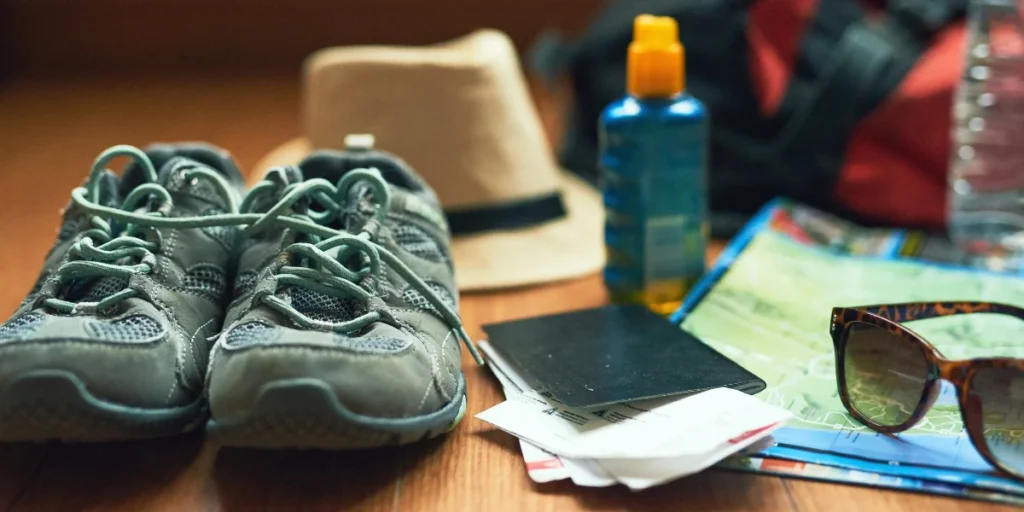
Travel essentials for a Machu Picchu trip including hiking shoes, passport, map, hat, water bottle and sunglasses

What Not to Bring

Machu Picchu has specific visitor restrictions.

The official visitor regulations include restrictions concerning oversized bags, food and tableware, umbrellas, tripods and certain camera or phone extensions, among other items.

Always check the current official visitor regulations before your visit because rules can be updated.

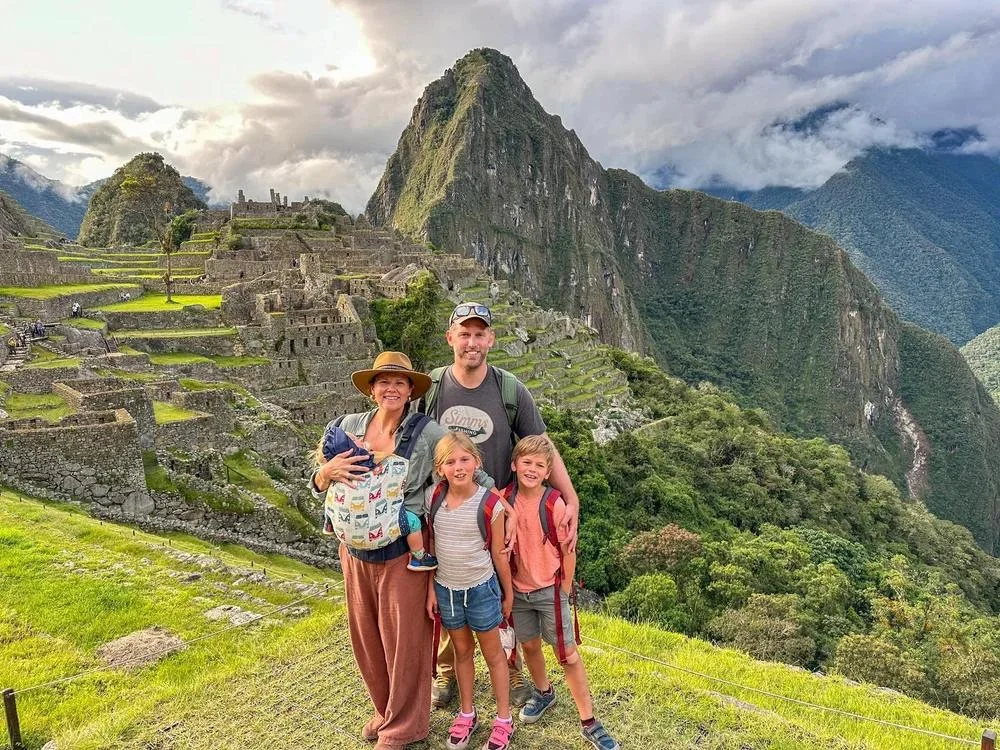
Machu Picchu with Kids

Machu Picchu can be part of a family trip to Peru, but parents should consider the physical demands of the selected route.

For families, a train-based visit is often easier to organize than a multi-day trek.

When visiting with children:

  • Choose a route appropriate for their age and physical ability.
  • Bring water and sun protection.
  • Carry rain protection.
  • Plan regular breaks.
  • Avoid overloading the itinerary.
  • Check current route and age requirements before purchasing tickets.

If your children are older and accustomed to hiking, a trekking experience can also become part of the family itinerary.

Family with children visiting Machu Picchu in Peru


Accessibility at Machu Picchu

Machu Picchu is an archaeological site built on steep mountain terrain, with uneven surfaces, stairs and changing elevations.

Accessibility therefore varies depending on the route and the individual visitor’s mobility needs.

Travelers with mobility limitations should review the current official information before purchasing a ticket and consider their transportation, route and assistance requirements as part of the planning process.

Do not assume that all circuits provide the same level of accessibility.


Machu Picchu Visitor Rules

Machu Picchu is a protected archaeological and natural heritage site, so visitors must follow established regulations.

Visitors should:

  • Remain on the designated route.
  • Respect archaeological structures.
  • Follow instructions from site personnel.
  • Avoid touching or climbing archaeological structures.
  • Respect other visitors.
  • Avoid leaving waste behind.
  • Follow current restrictions regarding bags and personal items.

Certain objects and activities are restricted within the sanctuary, including oversized bags, food and tableware, alcohol, umbrellas, tripods and certain photographic equipment or extensions.

Always check the current official visitor regulations before your trip.

FAQ: Machu Picchu Travel Guide

How high is Machu Picchu?

Machu Picchu is approximately 2,430 meters (7,972 feet) above sea level.

How do you get to Machu Picchu?

You can reach Machu Picchu by train, through the Classic Inca Trail, Salkantay Trek, Inca Jungle routes or alternative approaches such as Hidroelectrica.

How far in advance should I buy Machu Picchu tickets?

There is no single advance-booking period that applies to every traveler. Availability depends on the date, route, season and demand. Check the official ticketing system before planning your transportation.

Which Machu Picchu circuit is best?

There is no universal answer. Circuit 2 is designed around the classic experience, Circuit 1 emphasizes panoramic areas and Circuit 3 includes routes in the royal sector and options involving Huayna Picchu and other hikes.

Can you visit Machu Picchu without hiking?

Yes. A train-based visit allows travelers to reach Machupicchu Pueblo without completing a multi-day trek.

Can you visit Machu Picchu in one day?

Yes. A one-day train-based itinerary is possible, although it requires careful coordination between transportation and your entrance time.

Is Machu Picchu difficult to visit?

The archaeological site itself does not require a multi-day trek, but walking conditions can include stairs, uneven surfaces and steep sections. Additional mountain routes such as Huayna Picchu or Machupicchu Mountain require more physical effort.

Can children visit Machu Picchu?

Yes, families can visit Machu Picchu. The appropriate route depends on the child’s age, physical ability and the current regulations for the selected route.

What should I bring to Machu Picchu?

Bring comfortable walking shoes, rain protection, sunscreen, sunglasses, water, a hat, a small backpack and any essential personal medication.

Plan Your Machu Picchu Trip

Planning Machu Picchu becomes much easier when you make the main decisions in the right order.

Step 1 — Decide how you want to experience Machu Picchu: Choose between a train visit or a multi-day trekking experience.

Step 2 — Choose your travel date: Consider weather, season and your wider Peru itinerary.

Step 3 — Select your circuit and route: Your ticket determines the route you can follow inside the archaeological site.

Step 4 — Organize transportation: Coordinate trains, buses, trekking schedules and accommodation.

Step 5 — Choose where to stay: Decide whether Cusco, the Sacred Valley, Ollantaytambo or Machupicchu Pueblo makes the most sense for your itinerary.

Step 6 — Prepare for the visit: Check the weather, pack appropriately and review the current visitor regulations.

Step 7 — Build Machu Picchu into your Peru itinerary: Machu Picchu works particularly well when combined with Cusco, the Sacred Valley and other destinations in southern Peru.

Explore Machu Picchu with Peru Bucket List

Planning Machu Picchu can involve trains, tickets, circuits, transportation, accommodation and timing.

Our local team can help you organize your experience around your itinerary, interests and travel style.

Whether you prefer a comfortable train visit or want to experience Machu Picchu through the Inca Trail, Salkantay or Inca Jungle, we can help you plan your journey.

Ways to Experience Machu Picchu

Machu Picchu can be experienced in several different ways. The right option depends on your available time, physical ability and preferred travel style.
DESIGN YOUR PERU TRIP

Create Your Perfect Experience

Every traveler is different. Whether you’re looking for a private tour, special activities, or a fully customized itinerary, we’re here to help make it happen.


    Pay Safely With Us

    The payment is encrypted and transmitted safely with an SSL protocol.

    +51 913 965 587

    Sales & travel support

    libro de reclamaciones

    We customize every detail of your trip!

    Create Your Perfect Experience

    Every traveler is different. Whether you’re looking for a private tour, special activities, or a fully customized itinerary, we’re here to help make it happen.


      Pay Safely With Us

      The payment is encrypted and transmitted safely with an SSL protocol.

      +51 913 965 587

      Sales & travel support

      libro de reclamaciones

      We customize every detail of your trip!

      Loading...